Writing Exercise # 8

Why Write?  

Write a one-page outline of your reasons for writing…

Over the years, I’ve asked many beginning writers why they want to write and established writers what drives them to write.

The answers are many and varied, because writing is such a personal journey. However, most responses fit under the following headings:

  • For myself
  • For family and friends
  • For others
  • To be famous
  • Because I have something to say
  • I have specific messages for others
  • For money/career
  • I feel the need/compulsion to write

Identifying with one of these reasons does not necessarily exclude all the others, and you may have several reasons for writing. Likewise, your reasons may change over time.

The notion behind this exercise is that it is important for you to know what is driving you to write at any given time.

(Related to Writing Tip #9 – here)

Writing Exercise #7

What Kind Of Writer Are You?

There are no right or wrong answers to the question ‘What kind of writer are you?’ However, knowing the answer yourself will help you to work with the writer in you and make the most of your attributes and skills.

Get to know the writer in you by answering the following questions – and any others you would like to add for yourself. Further questions can be asked over time if you find this helpful.

The idea is to provoke thought and to assist you to understand the way you approach your writing.

There are not always definitive answers to these questions, but asking them of yourself will remind you of your most likely way of working as a writer. There will be grey areas and your focus may shift over time.

Begin with these questions…

Are you a spontaneous writer, who writes when the mood takes you?

Or, a structured writer, who sets aside specific times for writing?

Do you write to a plan, or go with the flow of how your work evolves?

Do you take notes, or trust your memory?

Do you carry notebooks, or jot ideas on scraps of paper, old receipts or anything else you can lay your hands on in the moment?

Do you only write when you’re alone, or can you write anywhere, anytime?

Are you a night writer, or a morning writer?

Do you write one piece of work at a time, or have several projects on the go at once?

What stimulates your creative juices?

Writing Exercise #6

Finding The Writer In You

Part A:

Take a piece of paper and brainstorm your history as a writer – regardless of how small you think that history is. We all had experiences of words and writing at school – spelling, reading, compositions, school magazines and so on. For various reasons, some of us struggled more than others with these, but we all have our own story to tell (see my recent blog posts on my childhood experiences – here).

Begin by listing your school experiences, then add other writing endeavours… letters (to family, friends, pen-friends…), poetry, stories, university essays, work reports, letters to the editor, competitions… whatever it is for you. Keep digging deeper and deeper – you may be surprised what you remember.

Part B:

Read through your list and then set it aside.

Part C:

Write the words, ‘I know I am a writer because…’ and then keep writing without censoring what flows onto the paper. Continue until you feel you’ve exhausted the subject.

You may end up with a dot-point paragraph, a page, or several pages. Everyone’s result will be different, but this doesn’t matter – what you are looking for, and what you will find, is your own unique experience.

This is the foundation on which to build your writing future.

Writing Exercise #5

Object Exercise (2)                                                                           

Begin by making a decision that, over the next few days, an object that will be the inspiration for this exercise will present itself to you. When it does, write a piece stimulated by that object.

The writing may be about the object itself, something or someone connected with the object, where it came from, your acquisition of it… or anything else about it that stirs in you.

Do not rush into this exercise. When I’ve set it for homework in weekly writing classes, some students have reported the inclination to rush around looking for an object to write about. However, the challenge here is to allow the object to call out to you, so to speak, to encourage you to go beyond the obvious.

Don’t worry that nothing will present itself. It will, and you will intuitively know when the moment has come to start writing.

Exercise #4

Object Exercise (1)                                                                          

Sit ready to write, either at your computer or with a notebook and pen. Close your eyes and take a few deep breaths to clear your mind.

When you feel ready, open your eyes and take in your surroundings.

Allow your gaze to rest on one object, then start writing a piece about that object and see where it takes you.


Exercise #3

First Memory                                                                             

Go back in your mind to the scene that you think of as the earliest one that has stayed with you. Jot down everything you remember about the event. Where were you? Was anyone else there? Who? What were the sounds, colours, textures or movements around you? Was there conversation? If so, who said what? Can you smell anything? And so on…

Explore the memory in as much detail as you can, and write it as though you’re sharing it with someone special.

Exercise #2

Favourite Place                                                                           

Take the reader on a journey to your favourite place. This may be a physical place, but it does not have to be – think as laterally as you wish.

Repeat this exercise over and over, and be surprised by the range of possibilities.

Practising this exercise will enhance your ability to write a sense of place and hold the reader’s attention through the experience.

Exercise #1

Free Writing Beyond Your Desk

Sit down ready to write. Close your eyes and take a few deep breaths to clear your mind.

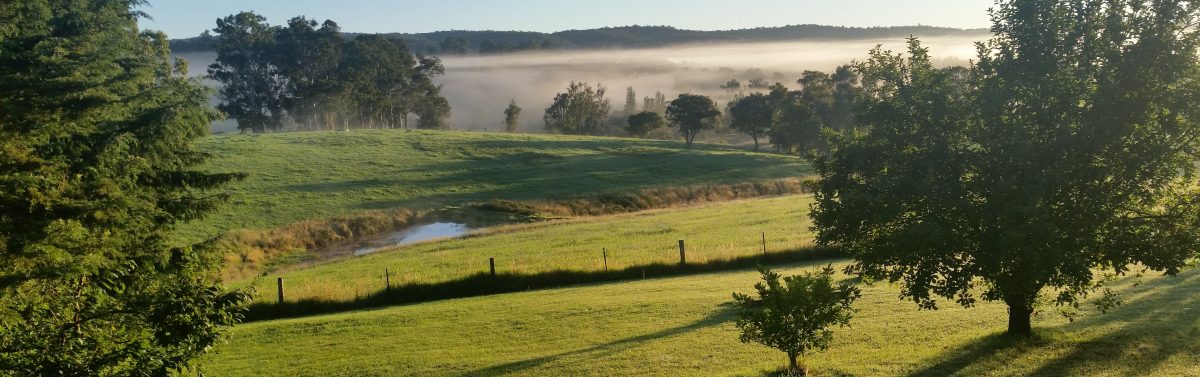
Open your eyes and notice what is beyond your desk. Is it a blank wall… a noticeboard… a photograph… children watching television in the next room? Perhaps it’s a window that looks onto a retaining wall in the garden… a tree… or distant hills flooded with afternoon sun casting shadows to the east.

Take in the scene before you, then let your gaze settle. Now you have your starting point, pick up your pen or reach for the keyboard and begin to write as you explore what is before you.

Write for at least five minutes… or more if you can.

Each time you practise this exercise it will be easier to continue for longer.